
The Double-Edged Treatment: How TYK2 Inhibitors Increase Breast Cancer Metastasis
Recent research from UC San Diego identifies the inflammatory protein TYK2 as a critical suppressor of breast cancer metastasis that functions by sensing physical cues within the tumor microenvironment. While TYK2 inhibitors are currently being developed to treat autoimmune diseases, this study reveals that their use may inadvertently promote cancer progression by releasing cells from their membrane-anchored, non-invasive state. These findings underscore the necessity of considering the mechanical tumor microenvironment in drug development, especially for understudied diseases such as those affecting female patients.
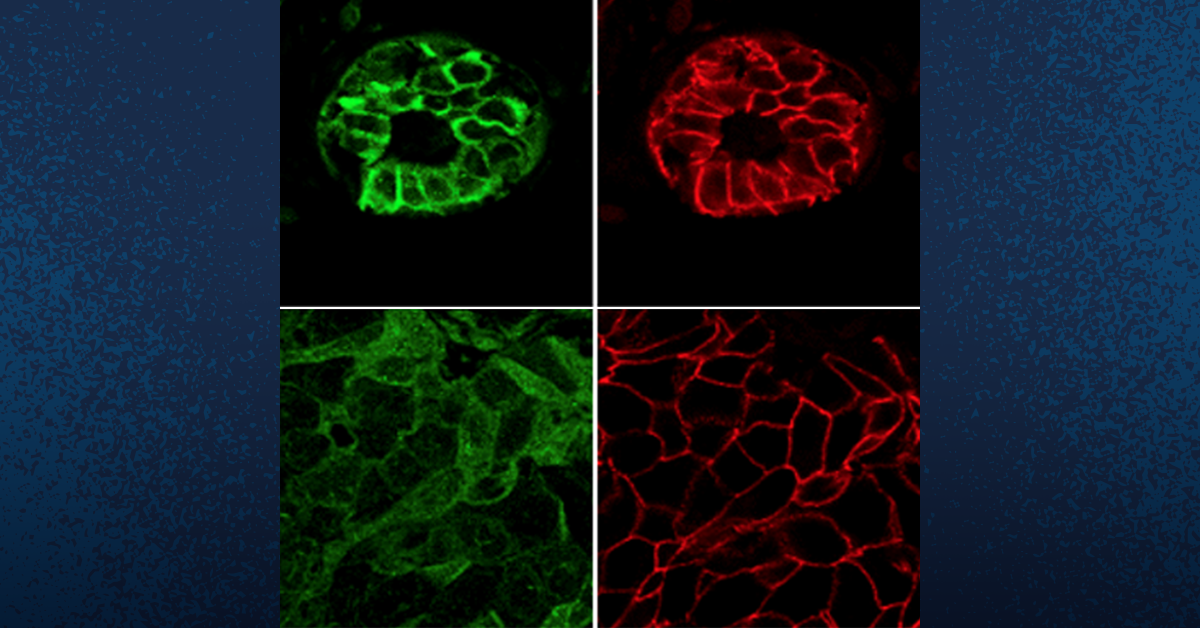
Image Credit: UC San Diego Today
As if ushering Spring Quarter for UC San Diego, on March 31, 2026, a research alert in UC San Diego Today titled “New Insights into Breast Cancer Metastasis” explained how scientists can treat breast cancer using a newly-studied mechanism the body naturally uses to prevent its spread in the first place. An inflammatory protein, Tyrosine Kinase 2 (TYK2), is one of the many molecules responsible for how cells sense and react to their physical surroundings. As a kinase, TYK2’s primary function is to catalyze the transfer of a phosphate group (PO43-) from ATP to a tyrosine, and in doing so, TYK2 activates immune signaling for cytokines and inflammation pathways.
TYK2 inhibitors (drugs that turn off TYK2) are currently being developed in response to autoimmune diseases. Autoimmune diseases describe a broad range of diseases where immune cells attack healthy “self” cells, and increased TYK2 signaling has previously been implicated in this process.
“Metastasis” is derived from the Greek words, meta, meaning “change”, and stasis, meaning “placement”; in cancer biology and oncology, metastasis refers to the process by which tumor cells from one area travel to other parts of the body i.e. changing their placement. Breast cancer poses an incredible risk for metastasis due to the cancer’s location in breast tissue, near a vast network of lymph nodes. Lymph nodes act as filters for the immune system, trapping and eliminating foreign, harmful substances. Though theoretically proximal location to lymph nodes should be disadvantageous for cancers, in reality, lymph nodes span the entire body. Once cancer cells evade the immune system in lymph nodes, they have access to travel to and infect other organs. According to the American Cancer Society, only 6% of breast cancers are initially diagnosed as metastatic, but upwards of 20% to 30% of breast cancer cases will progress to metastatic disease after initial treatment.
So, what do TYK2 inhibitors and metastasis have to do with one another? According to a Nature Communications article published on March 25, 2026, “in breast cancer, increased tumor stiffness is associated with elevated metastasis risks and poor survival” (Hu et. al., 2026). Stiffness in the extracellular matrix (ECM) increases as a result of cancer cells constantly constructing structural proteins; collagen and fibrin levels increase alarmingly, stiffening the ECM microenvironment. Under normal stiffness conditions, TYK2 is anchored to the membrane in conjunction with E-cadherin, a molecule responsible for cell-to-cell adhesion. In high stiffness conditions, like cancer, TYK2 is inactivated such that it can no longer prevent cancer cell invasion. In other words, inhibiting TYK2 promotes breast cancer metastasis.
Here lies the dilemma: TYK2 inhibitors used to treat autoimmune disorders may indeed rid the body of one disease while unintentionally fueling the development of another, more fatal one. Autoimmune disorders and breast cancer disproportionately affect female patients, and this research is setting a new precedent that reframes women’s health to be at the center of medicine. Thanks to the work of UC San Diego scientists, we now understand that TYK2 inhibitors can have off-target effects that need to be accounted for. Mapping TYK2’s role in immunity can still enlighten a new avenue for breast cancer treatment. Perhaps supplementing TYK2 while controlling for autoimmunity or synthesizing a drug that functionally resembles TYK2 without its immune signaling capacity? The future of breast cancer therapy with TYK2 is yet to be written, but it is sure to be exciting and eventful.
References
- Hu
- Z. et. al. (2026). Extracellular matrix rigidity controls breast cancer metastasis via TYK2-mediated mechanotransduction. Nature Communications (2026). https://doi.org/10.1038/s41467-026-70518-9
Topics
Comments
Sign in to join the conversation