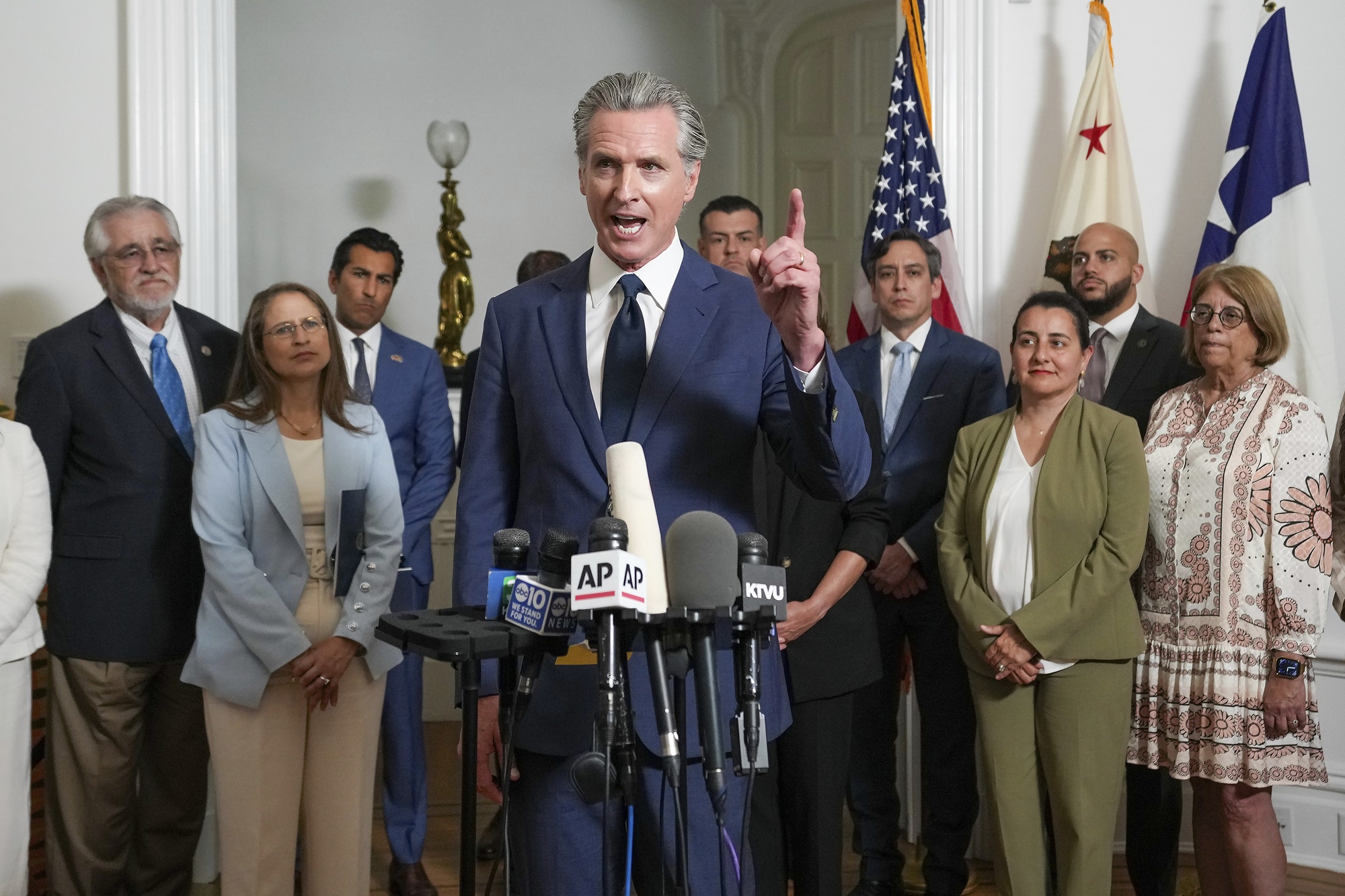

California voters participated in a special election on November 4, 2025, to consider Proposition 50, a constitutional amendment addressing congressional redistricting. The proposition would transfer the task of drawing U.S. House district boundaries from the independent Citizens Redistricting Commission to the state legislature for elections between 2026 and 2030. Following that, the commission would take back control in 2031. This would implement a new map as detailed in Assembly Bill 604, replacing the existing one set by the commission in 2021. The measure also calls on Congress to establish independent redistricting commissions across the country.
Proposition 50 arises from national discussions on redistricting practices. California created its Citizens Redistricting Commission via ballot measures in 2008 and 2010 to eliminate legislative involvement and curb gerrymandering. Proponents of the proposition reference recent redistricting in states like Texas, where a map approved in August 2025 could favor Republicans in additional seats. Governor Gavin Newsom and Democratic figures presented the measure as a way to address these developments and maintain balance in national representation. Critics, including Republicans and reform groups, view it as a step backward from impartial districting.
Supporters argue the change is necessary to respond to perceived imbalances in other states, protecting California's influence on matters such as education and healthcare. Organizations like labor unions and Democratic leaders back this position. Opponents claim it reintroduces partisan influence and erodes the independent system voters established. Entities such as the California Farm Bureau Federation and Republican officials label it a consolidation of power that might fragment communities and reduce accountability.
The campaign saw significant funding, with yes supporters collecting over $120 million and no campaigns raising around $44 million. Contributions came from party-affiliated groups and prominent donors. Pre-election polls indicated steady backing for approval, typically between 56 and 62 percent.
As of the latest updates on election night, with 64 percent of the estimated vote total reported, yes votes are at 4,444,629 or 64.6 percent, while no votes total 2,433,216 or 35.4 percent. The Associated Press has declared the measure passed. California relies heavily on mail ballots, and the count often spans days or weeks. For reference, in 2024, roughly 49 percent of votes were tallied by midnight Eastern time on election day, increasing to 62 percent by noon the following day. Given current patterns and past trends, we project that Proposition 50 will pass.
Should it succeed, the adjustment could alter the composition of California's 52 congressional districts, possibly tilting some toward Democrats based on reviews of the proposed map. Court challenges have emerged, with certain ones dismissed, though others may arise. This result highlights ongoing national conflicts over redistricting methods and authority.