
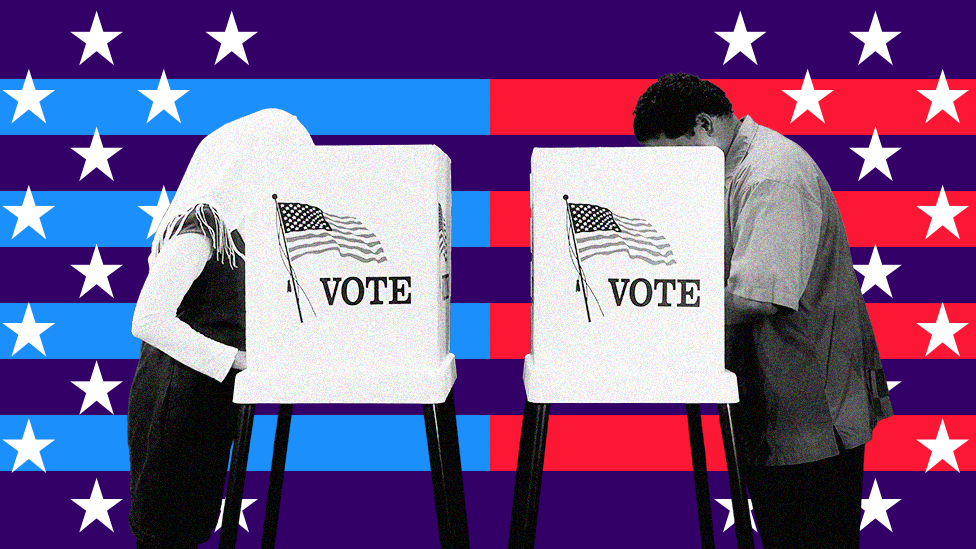
On October 8, 2025, UC San Diego officially launched the Center for Transparent and Trusted Elections, a major new research initiative funded by a nearly $2.5 million grant from the Election Trust Initiative. The center represents a significant investment in democracy infrastructure at a critical moment when public trust in electoral systems remains fragile despite recent improvements.
The Trust Crisis in American Democracy
Trust in elections forms the bedrock of democratic governance. When voters believe their ballots are counted fairly and openly, they participate more actively, accept election outcomes even when their preferred candidates lose, and continue engaging in the democratic process. However, recent years have witnessed erosion of this fundamental trust, creating urgent challenges for election administrators and civic leaders across the political spectrum.
Research conducted by UC San Diego scholars shows that while trust in elections improved following the 2024 presidential contest, this confidence remains vulnerable to partisan messaging, misinformation, and lack of transparency in election processes. The new Center for Transparent and Trusted Elections directly addresses this vulnerability by testing and implementing strategies to build lasting public confidence that transcends individual election cycles and partisan outcomes.
“Trust in elections improved after 2024, but we know how fragile that trust can be,” said Thad Kousser, co-director of the new center and professor in UC San Diego’s Department of Political Science. “This center is about finding practical solutions that help election officials build confidence among voters and ensure that trust endures beyond a single election cycle.”
Leadership and Expertise
The Center for Transparent and Trusted Elections will be co-directed by two nationally recognized experts in election administration and public trust.
Thad Kousser, PhD, serves as Professor in UC San Diego’s Department of Political Science within the School of Social Sciences. He has led multi-university studies on building voter confidence, presented findings to the U.S. Election Assistance Commission, and published in leading academic journals. Kousser also co-directs the Yankelovich Center for Social Science Research, which conducts extensive survey experiments tracking changes in voter trust across election cycles.
Lauren Prather, PhD, is Associate Professor of Political Science at UC San Diego’s School of Global Policy and Strategy. She authored Monitors and Meddlers: How Foreign Actors Influence Local Trust in Elections, winner of the American Political Science Association’s Best Book in Foreign Policy Award. Prather has briefed election officials nationwide and serves as a member of UC San Diego’s Future of Democracy Initiative.
Both directors bring hands-on experience working directly with election administrators. Over the past two election cycles, they have partnered with state and local officials in Texas, Georgia, Colorado, California, Arizona, and Connecticut to study trust-building efforts. They are now expanding partnerships in Oregon and Idaho.
Research Agenda and Activities
The Center will pursue a four-year research and partnership agenda focused on identifying, testing, and disseminating effective strategies to strengthen voter confidence. Key activities include transparency initiatives, communication studies, partnerships, and training.
Testing Transparency Initiatives
The center will evaluate initiatives such as public tours of election facilities, live-streamed ballot counting, post-election audits verifying accuracy, ride-alongs with election officials, and open house events explaining voting technology.
Early research by Kousser and MIT collaborators suggests that hands-on transparency experiences significantly increase trust among participants. The new center will expand this research to test interventions across diverse populations and political contexts.
Evaluating Communication Strategies
The center will identify trusted community messengers to convey accurate election information, test message framing to find approaches that build bipartisan trust, and develop accessible explanations of election security measures that resonate across education levels and affiliations.
Transparency alone is insufficient if voters do not understand or trust the information provided. Effective messaging requires culturally competent communication delivered through familiar, credible channels.
Building National Partnerships
The Center will collaborate with election officials, nonprofits, and policymakers to ensure research findings lead to practical improvements. Planned partnerships include hosting national convenings of administrators, producing research briefs and videos for practitioners, collaborating with professional associations, and supporting evidence-based policy recommendations.
Training Next-Generation Leaders
Recognizing the growing need for expertise in election science, the Center will train postdoctoral fellows, graduate students, and undergraduates through research apprenticeships and applied training, developing career pathways in democracy research and inclusive recruitment that fosters diverse perspectives.
Funding and Organizational Support
The $2.5 million grant comes from the Election Trust Initiative (ETI), a nonpartisan grant-making organization supported by The Pew Charitable Trusts, the Klarman Family Foundation, the Peter G. Peterson Foundation, and the Hewlett Foundation. Each contributed an initial five-year, $25 million commitment to strengthen election administration nationally.
“Public confidence in elections is a cornerstone of a healthy democracy,” said Ashley Quarcoo, executive director of ETI. “The Center for Transparent and Trusted Elections will bring researchers and election officials together to identify proven ways to strengthen voter confidence, regardless of who or what is on the ballot.”
The Center also benefits from UC San Diego’s robust infrastructure, including the Yankelovich Center for Social Science Research, which provides methodological expertise and survey infrastructure; the Future of Democracy Initiative, which connects interdisciplinary scholars studying democratic resilience; and UC San Diego’s top-ranked political science programs, offering intellectual and analytical depth.
Collaborative networks with MIT’s Election Data and Science Lab, Johns Hopkins’ Agora Institute, and The Elections Group further extend research capacity.
Governance and Advisory Board
To maintain nonpartisan rigor and relevance to practitioners, the Center will be guided by a research advisory board including election officials with state and county experience, professional association leaders in election administration, and scholars specializing in election integrity and research design.
This governance ensures research remains actionable and grounded in real-world practice.
Outputs and Timeline
Over the initial four-year grant period, the Center will produce peer-reviewed publications, research briefs for policymakers, video explainers for the public, national convenings of election professionals, and post-election survey data tracking voter trust after the 2026 and 2028 elections.
Significance for Democracy
The Center for Transparent and Trusted Elections launches at a pivotal moment. Despite modest gains in trust after 2024, polarization, misinformation, and low understanding of security protocols continue to undermine public confidence. The Center aims to move beyond rhetoric toward evidence-based solutions that endure across political cycles.
Co-director Lauren Prather emphasized, “We have a rare opportunity to build trust that lasts. Our research will help ensure Americans’ faith in elections is grounded in facts and transparency, not just in who wins or loses.”
Looking Forward
The Center’s work exemplifies UC San Diego’s leadership in democracy research and public policy innovation. By identifying what truly works to build trust, the initiative strengthens the democratic foundation on which all other institutions depend.
The Center for Transparent and Trusted Elections is housed jointly within UC San Diego’s School of Social Sciences and School of Global Policy and Strategy. Additional information will be available as operations expand through university channels.