
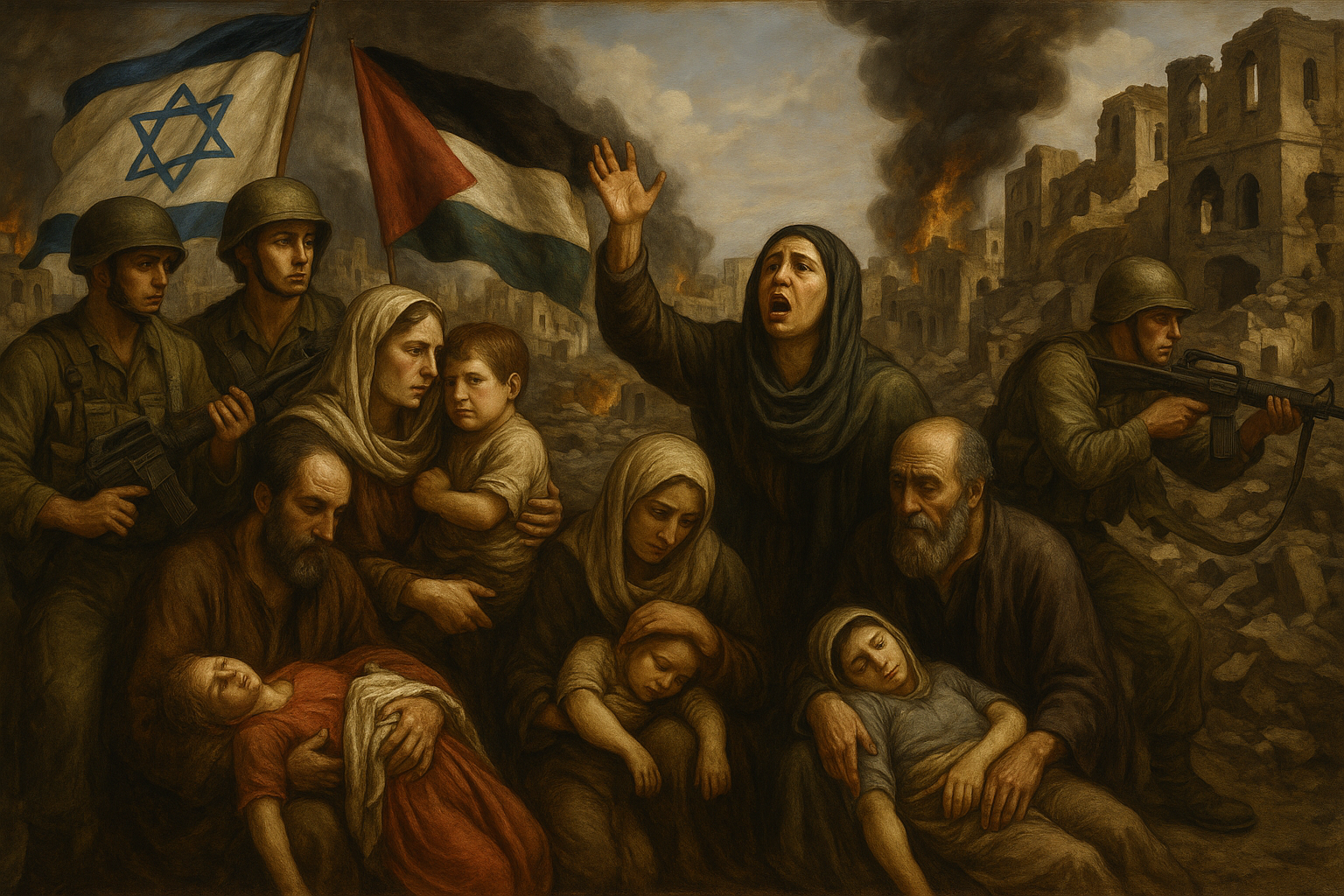
A fragile ceasefire between Israel and Hamas took effect on October 10, 2025, marking the first significant pause in hostilities since March and offering a glimmer of hope after two years of devastating conflict that has claimed over 67,000 Palestinian lives. The agreement, brokered by the United States under President Donald Trump with assistance from Egypt, Qatar, and Turkey, represents the first phase of an ambitious 20-point peace plan aimed at ending the Gaza war that erupted following Hamas's October 7, 2023 attack on Israel.
The Agreement's Terms
Under the ceasefire deal signed on October 9, 2025 in Sharm el-Sheikh, Egypt, Hamas released all 20 remaining living Israeli hostages on October 13 in exchange for Israel freeing approximately 250 Palestinian prisoners serving life sentences and over 1,700 Gazans detained during the war. The agreement also stipulates that Hamas must return the remains of 28 deceased hostages, though delays in this process have already created tensions.
Israeli forces began withdrawing to pre-designated lines within 24 hours of the cabinet's approval, relinquishing control of some areas while maintaining presence in approximately 53 percent of the Gaza Strip. The ceasefire terms call for a minimum of 600 trucks carrying humanitarian aid to enter Gaza daily, a critical provision for the 2.2 million residents facing confirmed famine conditions in parts of the territory.
Trump's 20-Point Peace Plan
President Trump's comprehensive plan extends far beyond the immediate hostage exchange and ceasefire. The framework envisions Gaza as a deradicalized terror-free zone with several ambitious components.
Governance: Gaza would transition to temporary rule by an apolitical Palestinian committee operating under a Board of Peace chaired by Trump, with former British Prime Minister Tony Blair in a leadership role. The Palestinian Authority would simultaneously undergo reforms to prepare for eventual governance.
Demilitarization: Hamas must disarm, with an international monitoring group overseeing the process through a weapons buy-back program. Trump has warned Hamas faces complete obliteration if it refuses to relinquish control.
Reconstruction: The plan calls for massive redevelopment of Gaza for the benefit of its people, with international coordination on funding and implementation.
Stabilization: A multinational force of approximately 200 troops, led by the U.S. military but including personnel from Egypt, Qatar, Turkey, and the UAE, will monitor the ceasefire without deploying American forces on the ground in Gaza.
Early Implementation Challenges
The ceasefire has faced immediate strains. Israeli forces killed at least nine Palestinians in Gaza on October 14, with the military claiming individuals had crossed designated boundary lines and approached soldiers. Hamas has described such incidents as violations of the agreement.
Disputes over the return of hostage remains have already disrupted aid flows. After Hamas handed over only four of the 28 deceased hostages' bodies by October 13, with one body later determined not to match any Israeli hostage, Israel responded by restricting humanitarian assistance and keeping the crucial Rafah border crossing closed. Israeli officials stated that aid deliveries would be curtailed or postponed due to the slow pace of returns.
Hamas Reasserts Control
In areas where Israeli forces have withdrawn, Hamas has moved swiftly to reassert authority, conducting public executions of alleged collaborators and deploying police forces to restore order. This has raised serious concerns about the viability of future phases of Trump’s plan, which require Hamas to disarm and cede governance.
Trump acknowledged this reality during his Middle East visit, stating that Hamas has been given temporary permission to maintain order. He said they do want to mitigate the issues and have been transparent about it, and they have been granted approval for a limited time. However, Israeli Prime Minister Benjamin Netanyahu has repeatedly insisted that the war cannot end until Hamas relinquishes weapons and governance, demands the group has consistently rejected.
Humanitarian Crisis Continues
The humanitarian situation remains catastrophic despite the ceasefire. The Integrated Food Security Phase Classification declared a famine in the Gaza Governorate area on August 22, 2025, with 2.1 million people facing extreme hunger. Nearly the entire population of Gaza has been displaced during the conflict, and massive destruction has rendered large portions of the territory uninhabitable.
While hundreds of aid trucks have begun entering Gaza through various crossings, the flow remains far below the required 600 trucks daily specified in the agreement. Infrastructure damage, security concerns, and Israeli restrictions continue to hamper delivery efforts.
International Response
The ceasefire has garnered broad international support. UN Secretary-General António Guterres welcomed the agreement and urged all parties to seize this momentous opportunity to establish a credible political path forward toward a two-state solution. France, Germany, Russia, the United Arab Emirates, Egypt, Turkey, Qatar, Jordan, and the United Kingdom all expressed support for the plan.
At a summit in Sharm el-Sheikh on October 13, Trump signed the ceasefire plan alongside leaders of Egypt, Qatar, and Turkey before approximately 30 world leaders. A new and beautiful day is dawning, and now the reconstruction begins, Trump declared, receiving Egypt’s highest honor, the Order of the Nile.
Uncertain Future
While Trump declared the war over during his address to the Israeli Knesset, many experts caution that the most difficult challenges lie ahead. The agreement’s future phases remain unresolved, including critical issues such as permanent governance arrangements, the composition of international security forces, Israel’s withdrawal from all of Gaza, and any pathway toward Palestinian statehood.
.jpeg?alt=media&token=b1982b15-4099-46c5-90f0-8aead14c8ebe)