
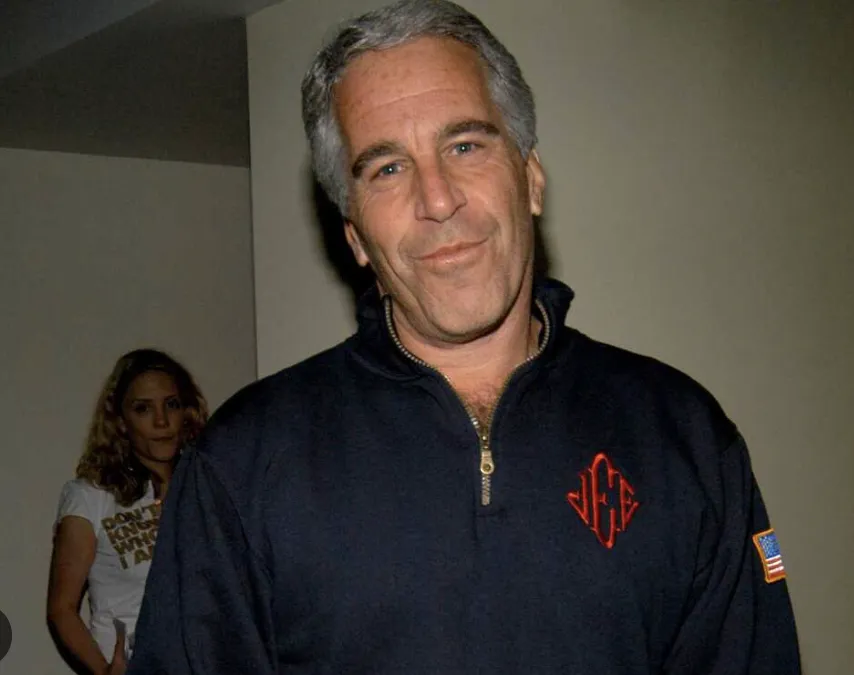
The Files That Changed Everything
On January 30, 2026, the U.S. Department of Justice released 3.5 million pages of documents, 180,000 photographs, and 2,000 videos from the Jeffrey Epstein investigation—the largest single public disclosure of materials related to the sex trafficking enterprise in American history. The release fulfilled a congressional mandate from the Epstein Files Transparency Act, signed into law by President Trump after passing Congress 427-1 in the House.
What these files reveal is not a secret "client list" of criminals, as some had speculated. Instead, they document something perhaps more troubling: a sophisticated trafficking operation that ran in plain sight for over two decades, with Epstein maintaining an extraordinarily broad network among global elites who either knew nothing of his crimes or failed to ask questions about his background.
The January 30 release also exposed a catastrophic government failure. Within 48 hours, survivors' lawyers reported that at least 43-47 victims' identities had been exposed despite redaction promises, explicit photographs of young women had been published without consent, and survivors were receiving harassing messages from internet users combing the files. The Department of Justice acknowledged errors were "inevitable" but offered no explanation for how it failed to protect the very people the prosecution was supposed to serve.
Elon Musk and the Wildest Party
Among the most striking revelations are email exchanges between Elon Musk and Jeffrey Epstein from 2012 and 2013. In November 2012, Epstein asked Musk how many people he wanted to fly by helicopter to his Caribbean island. Musk responded that it would likely be just him and his then-wife, Talulah Riley. He then asked: "What day/night will be the wildest party on your island?"
The emails show Musk declining some invitations but accepting others. In December 2013, Epstein asked if Musk would come for Christmas and mentioned that "Woody Allen was with me." Musk responded "Yes." Follow-up emails show Epstein's assistant, Leslie Groff, sending a schedule reminder: "Reminder: Elon Musk to island Dec. 6 (is this still happening?)" The ambiguous phrasing—"is this still happening?"—raises questions about whether the visit materialized.
After the release, Musk posted on X (formerly Twitter) that he had "declined repeated invitations to go to his island" but acknowledged "some email correspondence with him could be misinterpreted." There is no documentary evidence that Musk visited the island, and he has never been accused of wrongdoing by any Epstein victim. However, the emails show Epstein's ability to maintain relationships with the world's richest individuals years after his 2008 guilty plea for soliciting prostitution from a minor—relationships that continued well into the 2010s.
Bill Gates and his Allegations
Among the most controversial revelations are July 2013 emails that Epstein wrote to himself, making detailed allegations about Bill Gates' personal conduct. In these drafts, Epstein alleged that Gates engaged in extramarital affairs with "Russian girls," required drugs to "cope with consequences" of these encounters, and that Epstein had helped facilitate meetings with married women.
The Gates Foundation responded swiftly: "These claims are absolutely absurd and completely false. The only thing these documents demonstrate is Epstein's frustration that he did not have an ongoing relationship with Gates and the lengths he would go to entrap and defame."
The context matters significantly. According to Wall Street Journal reporting, Epstein appears to have drafted these allegations after Gates ended contact with him, possibly following the discovery of Gates' affair with Mila Antonova, a Russian bridge player Epstein had introduced to him. The timing suggests Epstein may have been crafting leverage material after losing a relationship he valued.
Bill Gates appears hundreds of times in the released documents, but overwhelmingly in news clippings and correspondence unrelated to the allegations. No Epstein victims have accused Gates of wrongdoing, and Gates has not been charged with any crime. The emails are presented as Epstein's own claims, unverified and uncorroborated by any other evidence in the files.
Donald Trump's Flight Logs
Trump's name appears over 1,000 times in the released documents, more than any other individual. The most significant revelation is documentary confirmation that he flew on Epstein's private jet multiple times during the 1990s—directly contradicting Trump's December 2024 statement that he "was never on Epstein's plane."
Flight logs and testimony from Epstein's house manager Juan Alessi document that Trump:
Flew on Epstein's "Lolita Express" on multiple occasions in the 1990s
Visited Epstein's Palm Beach mansion
Did not stay overnight
Never received a massage at the property
Dined with Epstein but ate in the kitchen with household staff
The release also includes a compilation of unverified allegations against Trump submitted to the FBI by anonymous sources. These include an FBI form referencing a complaint from a woman identified as "Jane Doe" alleging sexual assault when she was 13. This complaint mirrors allegations from a 2016 lawsuit that was later retracted.
However, the Department of Justice issued an explicit statement accompanying the release: "The claims are unfounded and false, and if they have a shred of credibility, they certainly would have been weaponized against President Trump already." The DOJ further stated these were "untrue and sensationalist claims against President Trump that were submitted to the FBI right before the 2020 election."
Critically, no known Epstein victims have publicly accused Trump of sexual misconduct. Trump stated that he had a "falling out" with Epstein years ago around 2004, and that the files exonerate him.
Prince Andrew's Post-Conviction Intros
Perhaps the most damaging revelations concern Prince Andrew (now former Duke of York). The files include email exchanges from 2010—two years after Epstein's guilty plea—showing Epstein continuing to introduce Andrew to young women.
In an August 2010 email, Epstein writes: "I have a 26-year-old Russian woman, clever, beautiful and trustworthy. Would you like to see her?" Andrew responds: "Great. Any additional information you might have about her that could be useful? What have you told her about me, and have you given her my email as well?"
A month later, Andrew proposes: "What about dinner at Buckingham Palace? We will have plenty of privacy." Epstein responds: "That would be wonderful. We will need to think about how we can ensure/have private time."
Most significantly, the release included photographs appearing to show Andrew on all fours over a woman lying on the floor, his face directed toward the camera. The context, date, and identity of the woman remain unknown. The images triggered immediate international attention. British Prime Minister Keir Starmer called for Andrew to testify before U.S. Congress. King Charles III had already stripped Andrew of his titles in October 2025, citing "the seriousness of the situation with Jeffrey Epstein."
Andrew has consistently denied wrongdoing and has not been charged with any crime. However, trafficking victim Virginia Giuffre alleged in 2011 that Epstein trafficked her to Andrew for sex when she was 17; Andrew denies this allegation. The new emails demonstrate that Epstein was introducing Andrew to women years after his criminal conviction, suggesting either Andrew's awareness of Epstein's background and comfort proceeding anyway, or a shocking lack of due diligence about his associate's criminal history.
Steve Bannon's Texts and Documentary
One of the most detailed correspondence threads involves Trump's former White House strategist Steve Bannon and Epstein. From 2018 through Epstein's death in August 2019, the two exchanged hundreds of text messages and emails.
The communications show an active, ongoing relationship. In 2018, Bannon told Epstein: "I'd like to do a documentary on the real story," to which Epstein responded: "yes, great idea." Documents show Bannon filmed hours of interviews with Epstein as part of what sources describe as Epstein's effort to rehabilitate his public image in his final years.
In March 2019, Bannon asked Epstein if he could use his private plane to pick him up in Rome; Epstein agreed to help arrange the flight. Emails show that Epstein gave both Steve Bannon and his son identical Hermes Apple watches ($1,499 each) in late 2018 or early 2019.
Most cryptically, in June 2019—just two months before his death—Epstein texted Bannon: "Now you can understand why trump wakes up in the middle of the night sweating when he hears you and I are friends."
This message is striking because it suggests Epstein believed his friendship with Bannon gave him leverage over Trump or at minimum caused Trump deep concern. The message was sent just weeks before Epstein's arrest in July 2019 and his subsequent death in jail.
Bannon has not publicly responded to media inquiries about the documentary project or the substance of his communications with Epstein. No Epstein victims have accused Bannon of wrongdoing. The correspondence shows a social and professional relationship, not participation in criminal activity. However, the documentary project itself raises questions about Bannon's judgment in assisting with a rehabilitation effort for a registered sex offender.
The System That Failed
Perhaps the most damning revelation from the files is evidence of a systemic failure that allowed Epstein to operate openly for decades after his 2008 guilty plea.
By 2007, federal prosecutors in Florida had prepared a comprehensive 60-count federal indictment against Epstein, supported by detailed victim statements and evidence. Instead of pursuing federal charges, then-U.S. Attorney Alexander Acosta negotiated a non-prosecution agreement that allowed Epstein to plead guilty to two state charges and receive an 18-month sentence. He served approximately 13 months with work-release privileges that allowed him to maintain an office during the day.
A Department of Justice Office of Professional Responsibility review found that Acosta's decision marked "a departure from typical practices" and that the secrecy "risked misleading victims" and "undercut public confidence." However, because OPR found Acosta did not violate a "clear and unambiguous" rule, he faced no discipline.
This decision had catastrophic consequences. Epstein remained free, wealthy, and well-connected for over a decade. He traveled internationally, maintained multiple properties, and cultivated relationships with some of the world's most powerful figures. Between 2008 and 2019, law enforcement agencies had opportunities to expand investigations, recruit cooperating witnesses, and pursue additional charges—opportunities that appear not to have been systematically pursued.
The 2019 arrest and subsequent prosecution by the Southern District of New York—under different prosecutors—finally resulted in serious federal charges. Epstein died in custody in August 2019, officially ruled a suicide by Manhattan's medical examiner.
Victim privacy Concerns
Despite assurances that the DOJ would protect victim privacy through careful redaction, the release triggered an unprecedented privacy disaster.
Within 48 hours, attorneys representing over 200 Epstein survivors reported that they had logged "thousands of redaction failures on behalf of nearly 100 individual survivors." According to Wall Street Journal analysis, at least 43-47 victims' full names were left unredacted in documents, including minors who had never been publicly identified. In one instance, an FBI document listing 32 minor victims had only one name redacted.
The New York Times identified nearly 40 nude or sexually explicit photographs published in the release, showing young women or potentially teenagers with faces visible. These images appear to have been from Epstein's personal collection and should have been withheld entirely, not merely redacted.
Survivors reported receiving harassing messages within hours as internet users combed the PDFs and shared names on social media. Lawyers for over 200 survivors filed an emergency petition with federal judges, characterizing the situation as potentially "the single most egregious violation of victim privacy in one day in United States history."
Deputy Attorney General Todd Blanche acknowledged that errors were "inevitable" given the scale of the undertaking (500+ attorneys reviewing 6 million pages in 75 days), but offered no explanation for why the department failed to protect victim identities despite two months of review.
What Remains Hidden
Of the 6 million pages originally identified as potentially responsive to the Epstein Files Transparency Act, approximately 2.5 million remain unreleased. Congressional lawmakers have demanded justification for the withholdings and access to unredacted materials.
Key documents still largely unreleased or heavily redacted include:
The complete 60-count federal indictment from 2007
Comprehensive victim interview statements and FBI 302s
Complete email archives from Epstein's accounts
Videos and photographs (2,000 videos released, but the total universe unknown)
Grand jury transcripts (a federal judge ordered their release pending additional proceedings)
Representatives Ro Khanna and Thomas Massie, the lead sponsors of the Epstein Files Transparency Act, have expressed frustration with the DOJ's compliance, noting that the department released only about 58% of identified materials. Deputy Attorney General Blanche stated the withheld materials are subject to attorney-client privilege, child sexual abuse material protections, and ongoing legal proceedings—but lawmakers have demanded more transparency about what remains sealed and why.
The Department of Justice also explicitly addressed two major conspiracy theories: there is no secret "client list" as Attorney General Pam Bondi had suggested, and there is no evidence the government possesses proof of Epstein's murder. Epstein died in custody in August 2019, officially ruled a suicide.
The Big Picture
The January 2026 release confirms what federal prosecutors had understood since 2007: Epstein operated a systematic commercial sex enterprise targeting minors as young as 14, with logistics spanning multiple jurisdictions, staff participation, and a sophisticated recruitment and control network.
What the files additionally reveal is how thoroughly Epstein had normalized his presence among the world's most powerful individuals despite his 2008 conviction. Technology billionaires asked about island parties. A member of the British royal family sought private introductions to women. A Trump advisor filmed a documentary to rehabilitate Epstein's image. A Microsoft co-founder maintained contact. A former White House counsel called him "like having another older brother." A Giants owner received coached introductions to women.
In most cases, these individuals have not been accused of crimes by Epstein victims. No evidence suggests they participated in trafficking. However, the breadth of their documented associations raises uncomfortable questions about institutional due diligence, the power of wealth to maintain social access despite criminal history, and a system that allowed Epstein's 2007 indictment to be abandoned in favor of a deal that kept him free for another 12 years.
The files are simultaneously a partial reckoning and an incomplete one. Victims have achieved some transparency about their abuser's operations and his network. But the government's redaction failures mean that transparency came at the cost of re-traumatizing survivors by publicly exposing their identities. And the 2.5 million withheld pages suggest the full story of Epstein's enterprise, and the full extent of the network that sustained it, remains partially hidden.
.jpeg?alt=media&token=b1982b15-4099-46c5-90f0-8aead14c8ebe)